Pillow guide
How to Choose a Memory Foam Pillow for Your Sleep Position
A pillow should feel inviting, certainly—but its more important task is to meet your head at the right height. When choosing memory foam, consider how loft, firmness, shape and cover work together with the way you usually sleep.
There is a quiet elegance to a bed that seems effortlessly composed: smooth sheets, a settled duvet and pillows that look as good as they feel. Yet the right pillow is not simply a finishing touch. It is the layer that supports your head and neck through the hours you spend in bed, and its shape can change how comfortable your usual sleeping position feels.
Memory foam pillows are known for contouring under pressure. Rather than behaving like a loose pile of filling, foam responds to the weight and warmth placed on it, creating a more close-fitting sensation. But “memory foam” does not describe one universal experience. A sculpted contour pillow, a flat foam block and a moulded pillow with a removable insert may all feel quite different. So can two pillows with similar dimensions but different firmness or cover fabric.
The most useful starting point is not a fashionable material claim or an impressive-sounding specification. It is the position in which you spend most of the night. Side, back and stomach sleepers generally need different amounts of space filled beneath the head. The aim is a comfortable, neutral-feeling alignment—not a pillow that pushes the head sharply upward or lets it sink too far.
First, understand loft and firmness
Loft is the pillow’s height, either before you lie on it or under the weight of your head, depending on how a maker describes it. That distinction matters with memory foam: some designs compress noticeably, while others retain a more substantial profile. A pillow that looks lofty on the bed may settle once you lie down, so consider how it behaves under pressure rather than judging by appearance alone.
Firmness describes how resistant the pillow feels when compressed. A firmer pillow may hold its shape more steadily; a softer one may yield more readily. Firmness and loft are related, but they are not interchangeable. A low-profile pillow can feel firm, and a high-profile pillow can feel soft. Both qualities influence how the head rests, so compare them separately.
Memory foam can also feel different at different temperatures. Some foams become more yielding with warmth, while a cool room or a newly unpacked pillow may make the first impression feel firmer. This is one reason to look for clear care and break-in guidance and, when possible, a realistic trial period. Comfort is personal; an instant impression is useful, but it is not always the whole story.
- Loft: the height or profile of the pillow.
- Firmness: how much the pillow resists pressure.
- Contouring: how closely its shape responds around the head and neck.
- Recovery: how readily the foam returns towards its original shape after pressure is removed.
For side sleepers: fill the space comfortably
Side sleeping creates a visible gap between the mattress and the side of the head. A side sleeper pillow often needs enough loft to fill that space without forcing the head to tilt upward. If the pillow is too low, the head may feel as though it drops towards the mattress; if it is too high, it may feel propped away from the body. Neither sensation is especially restful.
Shoulder width, mattress softness and personal build all affect the gap, which is why a single “best” loft cannot suit every side sleeper. A broader shoulder or a mattress that lets the shoulder sink less may call for a different profile from a softer sleep surface that allows more compression. Treat general height recommendations as a starting point, not a prescription.
When trying a memory foam pillow, settle into your usual side-sleeping position and give the foam time to respond. Notice whether the head feels comfortably supported or whether you are aware of an upward or downward angle. The pillow should not make you work to find a position. If you wake frequently to fold, bunch or rearrange it, the shape or height may not be working for you.
Contour designs can appeal to side sleepers because their raised edges and shaped centre are intended to cradle the head. Their fixed form is not universally comfortable, however. A contour that suits one person’s preferred position may feel restrictive to another, especially if they change sides often. If you are considering a contoured shape, check its dimensions and return conditions, and assess it in the position you actually use at night.
For back sleepers: seek a balanced profile
Back sleepers often prefer a lower or medium loft compared with a side sleeper, though the right height depends on the individual and the mattress. The goal is a balanced, easy-feeling position: not an exaggerated lift beneath the head, and not so little support that the pillow seems to disappear. A supportive pillow should feel present without dominating the bed.
Memory foam’s close contour may be welcome if you like a pillow that moulds around the head rather than shifting freely. Yet deeply sculpted foam can feel too enveloping for people who prefer to move their head easily. Compare a gently shaped model with a traditional rectangular design if you are unsure. A softer contour does not necessarily mean a lower loft, so look at both the profile and the feel.
Pay attention to the pillow after a few minutes, not only during the first moment of contact. Does the foam feel comfortably responsive, or does it seem slow to adapt? Is the cover allowing enough air to circulate for your comfort? A pillow that feels luxurious in a cool showroom may behave differently in a warm bedroom, under a heavier duvet or with a close-fitting pillowcase.
For stomach sleepers: avoid unnecessary height
Stomach sleeping generally places the head turned to one side, and a very lofty pillow can add an uncomfortable sense of elevation. Many stomach sleepers therefore look for a relatively low profile and a softer feel. The practical test is simple: does the pillow keep the head close to the mattress, or does it feel as though it is lifting the face too far away?
Some memory foam pillows are designed with a fixed, substantial shape and may not suit someone seeking a very low, yielding surface. If you sleep on your stomach, examine the pillow’s compressed height and construction carefully. A model with removable layers or adjustable filling can offer more flexibility than a solid block, provided it can be reduced to a profile that feels right to you.
Sleep positions are not rules to follow rigidly. Many people move throughout the night. If you alternate between stomach and side sleeping, choosing a compromise is a personal balancing act: a pillow low enough not to feel imposing when face-down, yet supportive enough to feel comfortable when turned to the side. If no single pillow feels right in both positions, consider whether a more adjustable design is worth exploring.
The memory foam feel: close, buoyant or firm?
Memory foam pillows vary in how closely they follow the head’s contours. Traditional solid foam models can feel substantial and stable. Shredded foam designs often have a less uniform, more malleable quality, and may allow the user to shift material around. Some pillows combine foam with other fillings or use shaped layers to change the way the surface responds.
Neither a close contour nor a more buoyant feel is automatically superior. If you enjoy a pillow that stays in place and feels shaped around you, a moulded design may be appealing. If you prefer to fluff, fold or reposition your pillow, a rigid one-piece construction may feel limiting. Think about how you use a pillow while reading or settling down as well as how it feels once you are asleep.
Construction also affects upkeep. A removable cover may be easier to refresh than a pillow that can only be spot cleaned, but the cover’s washing instructions still matter. The foam core itself may need different care from the outer fabric. Always follow the manufacturer’s guidance rather than assuming the entire pillow can go into a washing machine.
Cover breathability and temperature
A pillow is a small part of the bedding ensemble, but its cover sits close to the face for hours. Fabric, weave and construction influence how it feels against the skin and how freely air seems to move at the surface. If you tend to feel warm, consider a removable cover in a breathable fabric and check whether the pillow’s structure is described as ventilated or designed to encourage airflow. These features may affect the experience, but no material can guarantee that every sleeper will feel cool.
Remember that the pillowcase adds another layer. A smooth cotton percale case may feel crisp and airy; a cotton sateen case tends to feel smoother and more draped. The overall impression depends on both the pillow cover and the bedding around it. A thick protector, tightly woven case or warm duvet can change the way a pillow feels, even when the pillow itself is unchanged.
For a considered bedding routine, choose care-compatible layers. A pillow protector can help keep the pillow fresh, but should fit without pulling the cover tightly over the loft. Check whether the protector and pillowcase are easy to wash at intervals that suit your household. Small details—such as a zippered cover, a secure closure and clear instructions—can make a premium pillow more practical over time.
A simple fitting test at home
Rather than choosing by product description alone, use a short, repeatable fitting test. Try the pillow on the bed where you normally sleep, with your usual mattress and pillowcase. Lie in your primary position and give the foam several minutes to settle. Notice whether the height feels natural, whether the shape accommodates your movement and whether the surface feels comfortable against your face.
- Start in your usual position. Do not assess a side sleeper pillow while lying flat on your back if side sleeping is your everyday habit.
- Check the profile. Look for a comfortable, unforced head position rather than a pillow that seems to push or drop the head.
- Notice pressure and contour. The foam should feel supportive to you, not intrusive or excessively slow to respond.
- Turn naturally. If you change positions at night, see whether the pillow remains comfortable when you do.
- Consider the whole bed. Include your usual pillowcase and think about the room temperature and duvet you use.
Keep in mind that a new pillow can feel unfamiliar, particularly if its shape differs from what you have used before. That does not mean you should tolerate persistent discomfort, nor does it mean every first impression is definitive. Read the care and trial information before buying, and use the pillow consistently during any trial period so you can judge it in ordinary conditions.
What to check before you buy
Specifications can help you compare options, but they are most useful when they answer practical questions. Look for dimensions, stated loft, foam type, cover composition and whether the design is one piece or adjustable. If a maker provides care instructions, read them before purchase; a pillow that requires specialist cleaning may not suit every household.
- Shape and dimensions: confirm that the pillow will fit your pillowcase and suit the way you position it on the bed.
- Adjustability: removable layers or filling can make it easier to fine-tune the height, although they do not guarantee a perfect fit.
- Cover: check whether it is removable, washable and compatible with your preferred pillowcase.
- Care: distinguish instructions for the cover from those for the foam core.
- Trial and returns: understand the time period, condition requirements and any hygiene restrictions.
- Claims: treat broad promises about sleep or health with care; focus on tangible details such as construction and dimensions.
Price alone cannot tell you whether a pillow will feel right. A beautifully finished, premium cover may elevate the tactile experience, but the essential question remains whether its support and profile suit your preferences. Equally, the highest loft or firmest option is not necessarily the most supportive for every person. Good comparison begins with your sleep position and ends with how the pillow actually feels on your own bed.
A natural-material alternative to foam
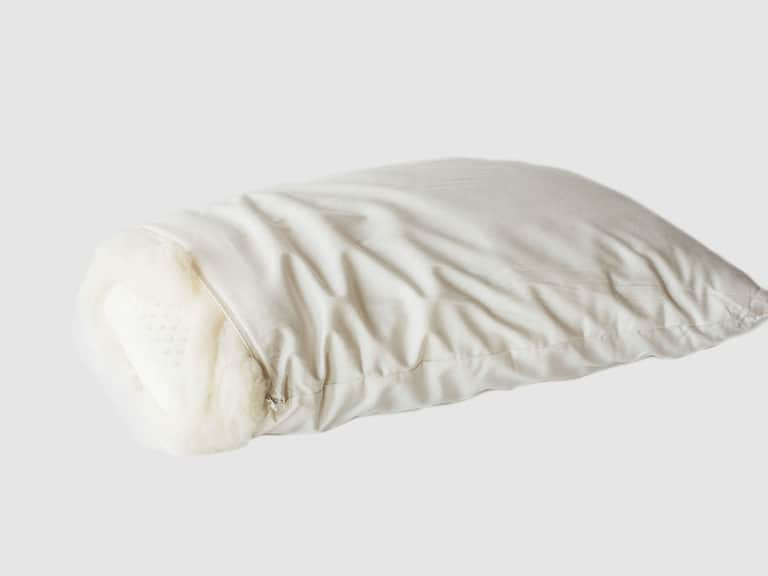
Memory foam is not the only route to a shaped, supportive pillow. For readers comparing materials, the Natural Wool-Wrapped Latex Bed Pillow combines a natural Dunlop latex core with a Premium Eco Wool wrap and an organic cotton sateen cover. Its construction is distinct from memory foam: it is an alternative to consider if you would like to compare a latex core and natural-fibre layers with a foam pillow’s contouring feel.
Its cover is removable and washable, while the pillow itself is specified for spot cleaning. As with any material, suitability depends on individual preference and the way you sleep. Comparing construction, care and feel—rather than assuming that all supportive pillows behave alike—can make the choice clearer.
The considered choice
A well-chosen pillow does not need to be the most complicated object in the bedroom. It should simply make your usual position feel comfortable, with a loft that suits the space beneath your head, a firmness you enjoy and a cover you can care for. Side sleepers often begin by considering a higher profile; back sleepers may prefer a more moderate one; stomach sleepers commonly look for a lower, softer surface. These are useful patterns, not strict formulas.
When comparing memory foam pillows, look beyond the label. Ask how the foam responds, whether the shape allows you to move, how the cover feels and what the care instructions require. Then test the pillow in the setting that matters: your bed, your bedding and the position in which you actually sleep. The right choice is less about chasing a universal ideal than finding a quiet, dependable fit for your own nightly routine.